

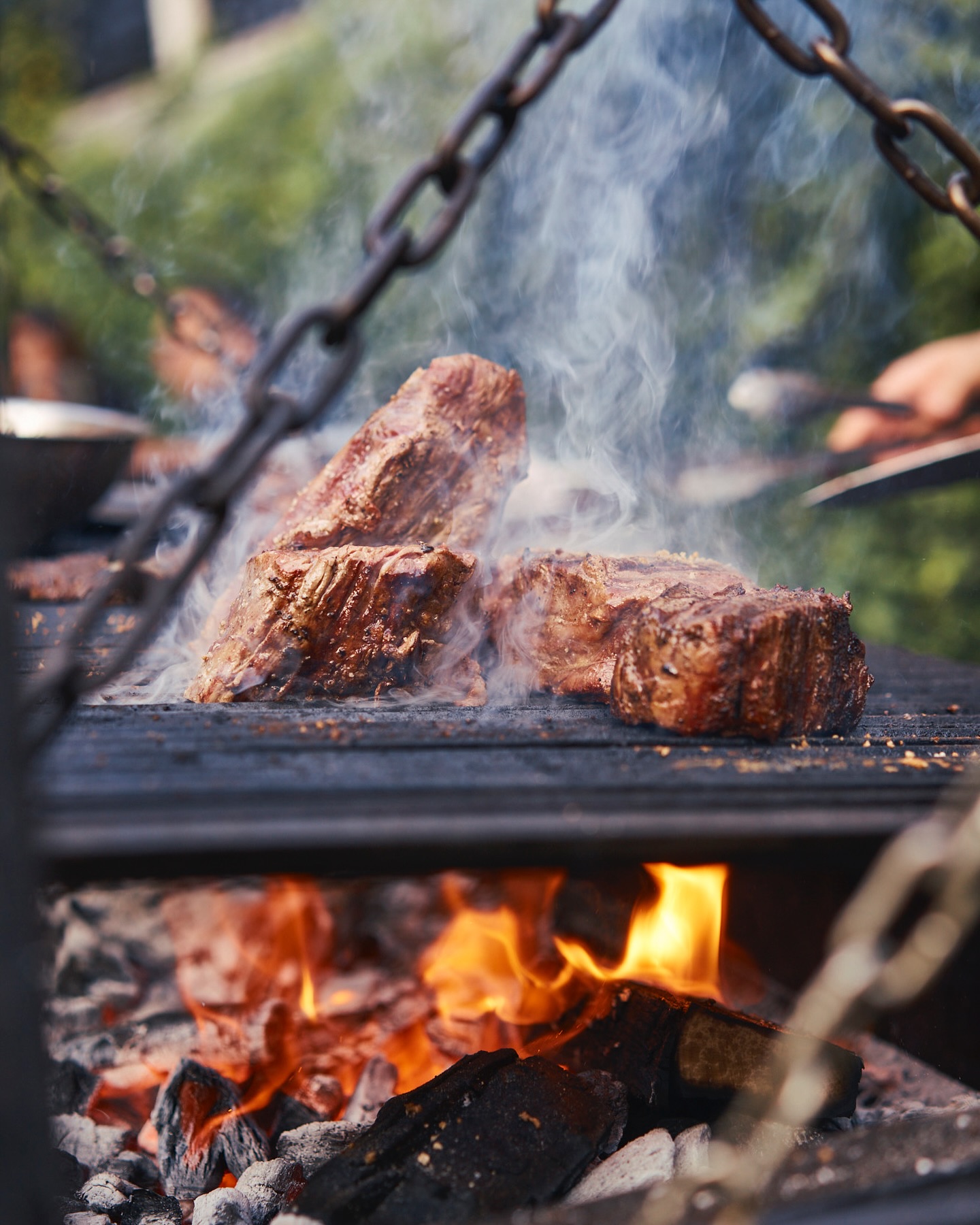
What Are the Benefits and Techniques of Charcoal Cooking?
Charcoal cooking goes far beyond adding flavor. The heat of glowing coals transforms ingredients, changes their texture, and creates the roasted aromas and subtle smoky notes that make live fire such an important part of the dining experience. Mastering this technique demands precision, patience, and a deep understanding of how fire behaves.
A grill may seem like a simple heat source, but cooking over charcoal requires technique, precision, and an understanding of fire. The intensity of the coals, cooking time, distance from the heat, and airflow can all change the final result.
At DANTE Brasa y Fuego, we see live-fire cooking as a way to let quality ingredients express their character. Charcoal is one of the tools that makes this possible, particularly when working with premium cuts of beef.
What Is Charcoal Cooking?
Charcoal cooking uses glowing coals produced from carbonized wood as the primary source of heat. Unlike a completely uniform heat source, a charcoal grill allows the cook to work with different heat levels and create both direct- and indirect-heat zones.
This technique is part of some of the world's great grilling traditions. In Argentine grilling, for example, managing the coals and controlling cooking time are essential parts of the asador's craft.
This tradition is also central to the career of Dante Ferrero, Argentine chef and founder of DANTE Brasa y Fuego, who has spent more than two decades exploring live-fire cooking, charcoal, and beef.
Benefits of Cooking Over Charcoal
The main difference with charcoal cooking is not simply temperature. It is the way heat, smoke, and the cooking surface interact with each ingredient.
- Flavor: Glowing coals can create natural roasted and smoky notes that enhance the character of the ingredient.
- Control: A charcoal grill allows different heat zones to be used depending on the type and thickness of the food.
- Texture: High heat encourages browning and caramelization on the surface while helping create a contrast with a juicy interior.
- Versatility: Charcoal works equally well with beef, seafood, fish, and vegetables.
This combination is especially valuable when cooking premium cuts. The technique should support the ingredient rather than overpower it. And the relationship between product, technique, and fire is part of what makes a live-fire steakhouse different.
Essential Charcoal Cooking Techniques
High-Heat Searing
Searing means exposing the surface of an ingredient to intense heat for a relatively short period. With beef, this helps create a deeply browned exterior and develop roasted flavors.
The goal is not necessarily to cook the center completely during the sear. Instead, the exterior is developed first, with the rest of the cooking controlled afterward.
Indirect Cooking
Indirect cooking places the food away from the most intense heat. This technique is particularly useful for thick cuts that need more time to reach the desired doneness without burning the exterior.
A common approach is to start over direct heat to develop the surface and then move the food to a gentler zone to finish cooking more evenly.
Managing Fire and Smoke
Fire needs oxygen, so airflow through a grill directly affects the intensity of the coals. Smoke also needs to be managed carefully.
More smoke does not automatically mean more flavor. A controlled amount can add depth, while excessive smoke can overwhelm more delicate ingredients.
The real skill lies in reading the coals and adjusting the fire according to what each ingredient needs. For more on the relationship between fire and flavor, explore why live-fire cooking creates more intense flavors.
What Foods Work Best Over Charcoal?
Charcoal cooking works particularly well with ingredients that benefit from intense heat, direct contact, and the flavor of glowing coals.
Thick cuts of beef, such as Ribeye, Tomahawk, and New York Strip, can develop a deeply browned exterior while retaining a juicy interior.
Seafood and fish, including octopus, shrimp, and whole fish, can develop roasted notes through quick, carefully controlled cooking.
Seasonal vegetables can also benefit from the grill. Corn, peppers, squash, and other produce develop caramelized surfaces and roasted aromas that complement their natural sweetness.
At DANTE, live-fire cooking extends well beyond beef. The menu includes dishes such as smoked cauliflower, grilled vegetables and fruit, and smoked burrata, demonstrating how versatile fire can be as a cooking method.
Charcoal and Premium Cuts
The relationship between fire and product becomes even more important when working with premium beef. Marbling, genetics, aging, and overall quality all influence how a cut should be cooked.
At DANTE, the selection includes PRIME cuts, Wagyu, and aged beef. The Wagyu selection includes Japanese A5 beef with certification of origin and available traceability.
With these products, the goal of the fire is not to add unnecessary complexity. It is to develop an appealing exterior, respect the desired doneness, and allow the character of the beef to remain the focus.
That is why understanding what Wagyu is and why it is considered one of the world's most premium beef options also means understanding the importance of the technique used to cook it.
Common Charcoal-Grilling Mistakes
A great grill is not simply about keeping the fire burning. Several common mistakes can affect the final result:
- Starting to cook before the coals are properly prepared.
- Failing to create direct- and indirect-heat zones.
- Constantly moving the meat before a proper crust has developed.
- Using too much smoke or allowing excessive flare-ups.
The key is to maintain control and adjust the cooking method to each ingredient.
The Role of the Grill in Charcoal Cooking
The final result also depends on the equipment. In a professional kitchen, having a system that provides consistent heat and reliable control over the coals makes it easier to cook different ingredients with precision.
At DANTE, the Mibrasa grill is part of the restaurant's live-fire approach. Learn more about how the Mibrasa grill transforms the flavor of beef and why fire control matters in a premium steakhouse.
The Experience of Cooking Over Fire
Charcoal cooking also changes the restaurant experience. An open grill allows guests to see the glowing coals and the work behind each dish. The sound of food hitting the grill and the aroma reaching the table become part of the anticipation.
At DANTE Brasa y Fuego, fire, an open kitchen, the atmosphere, and the food come together to create an experience designed to engage all the senses.
In Polanco, this combination of product, technique, and atmosphere becomes part of a dining experience that goes beyond simply enjoying a great steak. Discover more about what makes a premium dinner in Polanco special.
Charcoal Cooking: Product, Technique, and Fire
Cooking over charcoal is a combination of tradition and precision. The coals provide intensity and character, but the result depends on knowing how to control the heat, respect cooking times, and understand the characteristics of each ingredient.
For Dante Ferrero, this relationship with fire is part of a career spanning more than two decades. His experience with beef, charcoal, and long-fire cooking reflects a philosophy built around quality ingredients, patience, and respect for the product.
At DANTE, the concept can be summed up simply: less frying, more fire.
If you want to discover how this philosophy is applied to premium cuts, continue with our guide to beef cuts and the steakhouse experience in Polanco, or explore the DANTE menu.
Reserve your table and experience live-fire cooking for yourself.
reservaTIONSHow long does charcoal take to be ready for cooking?
Charcoal is generally ready when the pieces are fully lit and the coals have developed a consistent layer of gray ash. The timing varies depending on the type and amount of charcoal, the grill, and the level of heat required. The key is to wait until the coals are stable before starting to cook.
What is the difference between cooking with charcoal and wood?
Charcoal provides relatively stable heat and makes it easier to create different cooking zones. Wood can produce a more pronounced smoke profile and requires greater control over the combustion and the formation of embers. Both methods offer distinct characteristics depending on the ingredient and the desired result.
Can you grill seafood over charcoal without drying it out?
Yes. The key is to control both the heat and cooking time. Seafood such as shrimp, octopus, and fish can benefit from a quick sear and carefully controlled exposure to the heat, allowing them to develop roasted flavors while retaining moisture.
Does charcoal give steak a different flavor than gas?
Yes. Charcoal can create natural roasted and smoky notes that are generally less pronounced when cooking with gas. The final flavor depends on the type of charcoal, temperature, cooking time, and how the fire and smoke are managed.
Do you need special charcoal for premium cuts like Wagyu?
There is no single type of charcoal required for cooking Wagyu. What matters most is using quality fuel and controlling the temperature carefully enough to respect the cut's marbling and characteristics. At DANTE, the Wagyu selection includes Japanese A5 beef with information about its origin and available traceability.
How do you control the temperature when cooking over charcoal?
Temperature is primarily controlled through the amount and distribution of the coals, airflow, and the distance between the food and the heat source. Creating direct- and indirect-heat zones allows the cook to move ingredients according to their thickness, cooking time, and desired doneness.
Is charcoal cooking healthier than other cooking methods?
It can reduce the need for added fats compared with methods such as frying, but charcoal cooking is not automatically healthier. Good technique means controlling the temperature, avoiding excessive charring, and using appropriate cooking times for each ingredient.